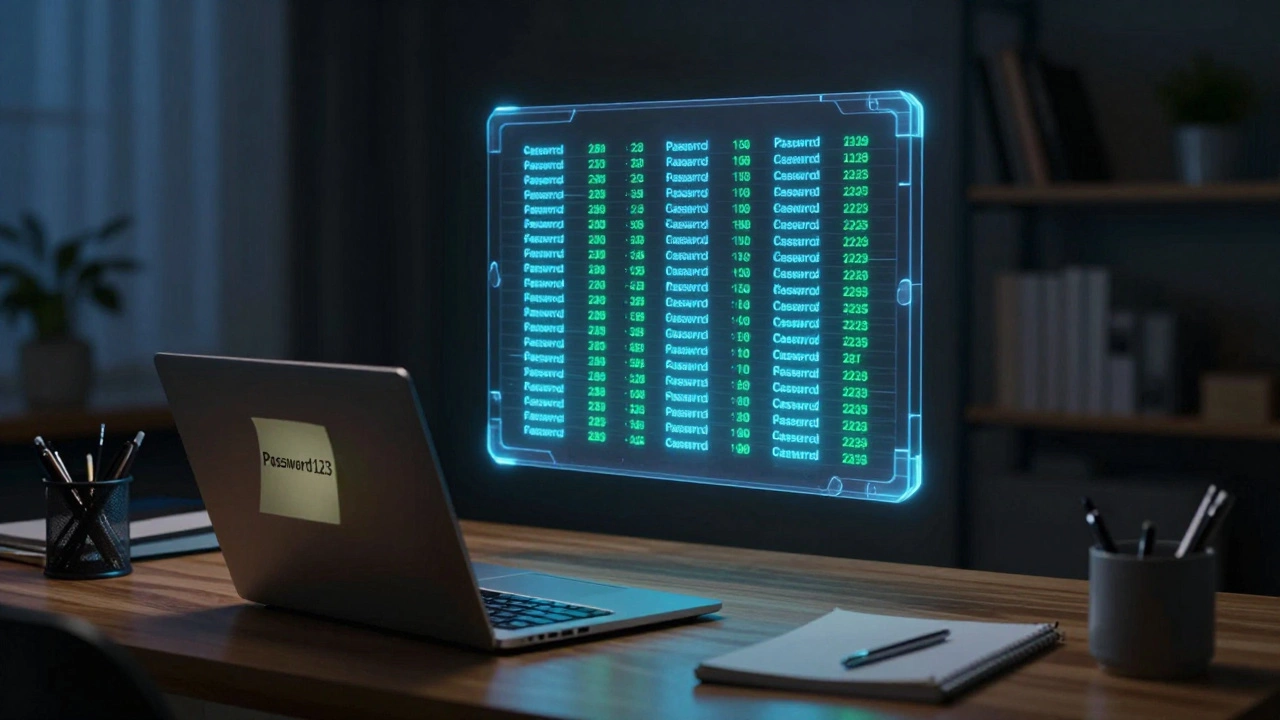
Most people use the same password for everything - their email, bank account, social media, even their Netflix profile. It’s easy. It’s familiar. And it’s dangerously stupid. If one site gets hacked - and they all do - your whole digital life is up for grabs. You don’t need to be a hacker to break into accounts like these. You just need to know that people reuse passwords. And they do. A lot. That’s where password managers come in. They don’t just store your passwords. They generate strong, unique ones for every site and log you in automatically. No more guessing. No more "Password123". No more panic when you forget your login.
Think of it like locking every room in your house with a different key. If someone steals one key, they can’t walk into your bedroom, your safe, or your garage. That’s what a password manager does for your online accounts. And yes, it’s as simple as typing your master password once. The rest? Handled. Some people still say, "I’ll just remember them." But humans aren’t built to remember 20 random strings like "Xq9#kL2$vPm!wR8&". We remember birthdays, pet names, and the name of that one bar in Bur Dubai where the music was too loud and the drinks were cheap. bur dubai massage might be a popular search, but your bank account shouldn’t be.
Why Password Reuse Is a Disaster Waiting to Happen
In 2024, over 3.5 billion credentials were leaked in data breaches worldwide. That’s not a typo. Billions. And guess what? Nearly 80% of those leaked passwords were reused across multiple accounts. Cybercriminals don’t need to crack your password. They just need to know it’s the same one you use everywhere. They try it on your email. If that works, they reset your bank password. Then your Amazon. Then your PayPal. All in under five minutes. No fancy tools. No hacking skills. Just a spreadsheet of stolen logins and a little patience.
Companies like Adobe, LinkedIn, and Yahoo have all been breached. Your password from 2012 might still be floating around on the dark web. And if you used it for your current bank account? You’re already compromised. Password managers stop this by making each password unique - and impossible to guess. They don’t just store passwords. They actively prevent the most common cause of breaches: human laziness.
How Password Managers Work (Without the Tech Jargon)
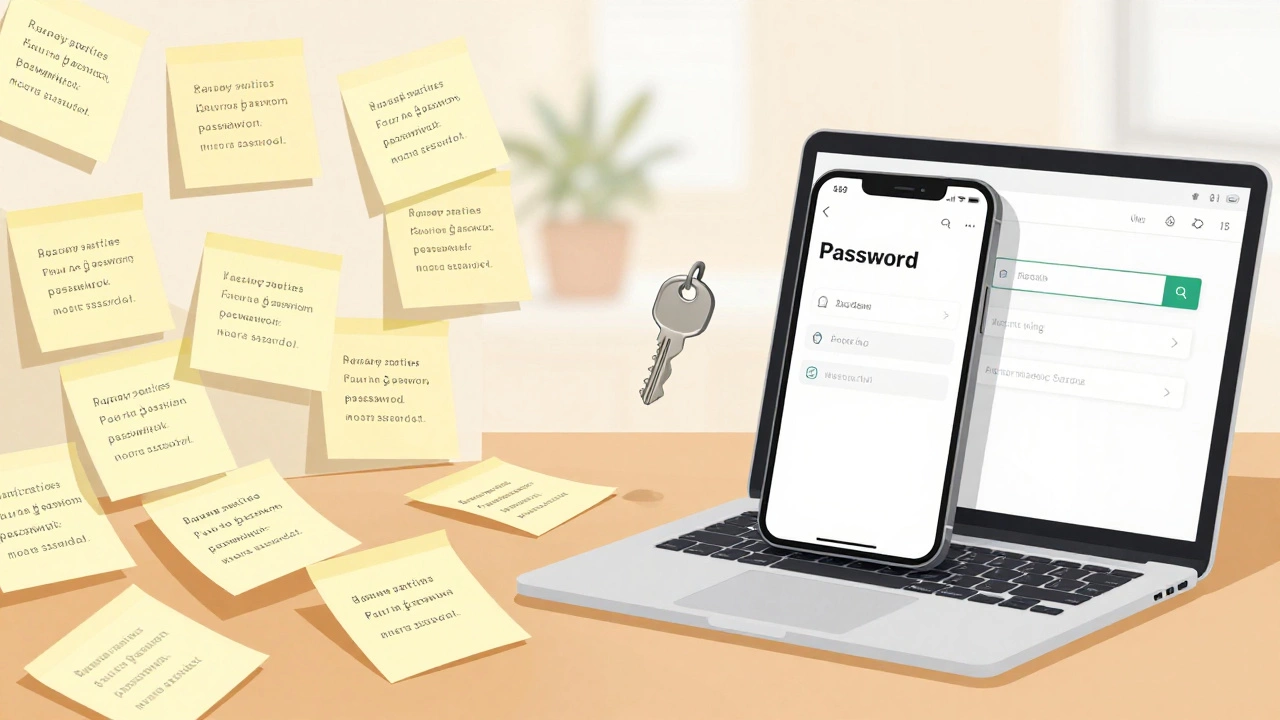
A password manager is a locked digital vault. You open it with one strong master password - the only one you need to remember. Inside, it holds all your other passwords, credit card details, even secure notes. When you visit a website, it auto-fills your login. When you create a new account, it generates a 16-character password with letters, numbers, and symbols. No thinking. No writing it down. No sticky notes on your monitor.
Everything is encrypted. That means even if someone breaks into the password manager’s servers, they can’t read your data. Only you can, with your master password. And if you forget it? There’s no backdoor. That’s by design. If there was, hackers would use it. So you’re the only key. That’s the trade-off: total control, total responsibility.
What to Look for in a Password Manager
Not all password managers are the same. Here’s what actually matters:
- End-to-end encryption - Your data is locked before it leaves your device. No one, not even the company, can see it.
- Two-factor authentication (2FA) - Adds a second layer. Even if someone gets your master password, they still need your phone or a security key.
- Password generator - Must create passwords longer than 12 characters with mixed symbols.
- Cross-device sync - Works on your phone, laptop, tablet. No more typing passwords manually.
- Breach alerts - Tells you if one of your accounts was in a leak.
Popular options like Bitwarden, 1Password, and Dashlane all hit these marks. Bitwarden is free and open-source. 1Password has a cleaner interface. Dashlane includes a VPN. Choose based on what you need, not what’s flashy.
The Myth of "I’m Not Important Enough to Be Hacked"
You think hackers only go after banks and governments? Wrong. They go after the easiest targets. That’s you. Your email holds your password resets. Your social media gives them your mom’s maiden name. Your fitness app has your birthdate. With just a few pieces of info, they can impersonate you, apply for credit cards, or lock you out of your own accounts.
There’s no such thing as "not a target." If you use the internet, you’re a target. Password managers don’t make you a hacker. They make you harder to crack. And that’s enough.
What Happens If You Lose Your Master Password?
This is the big fear. And it’s real. If you forget your master password, you lose everything. No recovery email. No "I forgot my password" button. That’s the point. But here’s how to avoid it:
- Write your master password down. On paper. Keep it in your wallet or safe. Not on your phone.
- Use a passphrase: "BlueCoffeeMug$2025!" is easier to remember than "xQ9#kL2$vPm!wR8&" and just as strong.
- Set up a trusted contact. Some managers let you designate someone to get access if you’re incapacitated.
Don’t rely on memory. Don’t write it in a Notes app. Do the simple thing: write it on paper. It’s low-tech, but it works.
Real People, Real Results
Sarah, a teacher in Melbourne, used the same password for her school portal, bank, and Netflix. When her school’s system was breached, her email got sold on the dark web. A week later, someone tried to reset her bank password. Luckily, her bank flagged it. She switched to a password manager. Now she has 47 unique passwords. She doesn’t remember one of them. And she sleeps better.
James, a freelance designer, got locked out of his client portal after his laptop crashed. He’d saved passwords in his browser. All gone. He lost three weeks of work because he couldn’t log in. Now he uses a password manager with cloud sync. He’s never lost access again.
Final Step: Just Start
You don’t need to migrate every account tomorrow. Start with your email. Then your bank. Then your social media. In a week, you’ll have three secure accounts. In a month, you’ll have ten. In three months, you’ll wonder how you ever lived without it.
And if you’re still thinking, "I’ll do it later" - remember this: the next breach isn’t coming next year. It’s coming next week. And your password is already out there. It’s not a question of if. It’s a question of when. Don’t wait for it to happen to you.
And yes, if you’re looking for something relaxing after a long day, dubai erotic massage might be on your mind. But your digital security shouldn’t be.
There’s no magic tool. No app that makes you invincible. But a password manager? It’s the closest thing you’ve got. And it’s free to try. Start today.
One last thing: if you’re using a password like "123456" or "password" - stop. Right now. Go change it. Use the password manager. You’ll thank yourself later.
And if you still think you’re too busy to set this up? You’re too busy not to.
Don’t let your next login be your last.
Some people think online security is about firewalls and antivirus software. It’s not. It’s about the little things you do every day. Like choosing a better password. Like using a manager. Like not being lazy. That’s what keeps you safe. Not technology. You.
And if you’ve ever wondered what it’s like to unwind in a luxury spa, sensual massage might be a tempting thought. But your digital safety deserves the same attention.